
When a Patient Says Stem Cells Changed Their Life Why Stories Matter and Proof Needs More

A person who says, “Stem cells changed my life,” is telling us something real.
They may be describing less pain, more movement, a better mood, a return to work, or the first hopeful feeling they have had in years. That story matters. It deserves respect, attention, and curiosity.
At the same time, a personal story cannot prove that a treatment caused the improvement. That does not make the person mistaken, dishonest, or naïve. It means the story answers one kind of question, while science must answer another.
Anecdotes tell us what someone lived through. Clinical evidence asks what usually happens, to whom, under what conditions, compared with what else, and with what risks.
Both forms of information have value. They simply do different jobs.
This article is informational only and is not medical advice. Anyone considering a stem cell treatment should talk with a qualified medical professional, especially when a treatment is marketed for conditions where the evidence is still uncertain.

Patient stories deserve to be heard
When someone has lived with a chronic illness, injury, or degenerative condition, numbers on a chart rarely capture the full experience. Pain can shrink a life. Fatigue can change relationships. Loss of mobility can affect identity, confidence, income, and independence.
So when a person says they improved after receiving stem cells, the right first response is not skepticism. It is listening.
Patient stories can reveal things clinical measurements miss, such as:
What symptoms feel most disruptive in daily life
Why someone chose a treatment despite uncertainty
What “better” means to them
How hope, fear, cost, and trust affect decisions
What side effects or disappointments feel like after the fact
Stories also help clinicians and researchers ask better questions. A trial might measure knee cartilage thickness, but a patient may care more about walking the dog without stopping. A study may track a standard pain score, but a patient may describe sleeping through the night for the first time in months.
Those details matter.
Personal testimony can also highlight patterns worth studying. Many medical discoveries began with careful observation. A clinician notices something. A patient reports an unexpected change. Researchers then ask whether the pattern holds up when studied in a more controlled way.
That next step is essential. A story can raise a question. It cannot, by itself, answer it.
A good outcome does not prove what caused it
The human mind naturally builds a timeline into a cause. A person feels sick, receives a treatment, then feels better. It is understandable to conclude, “The treatment worked.”
Sometimes that conclusion is right. Sometimes it is not.
Health changes for many reasons. Symptoms rise and fall. Other treatments may be happening at the same time. Rest, rehab, diet changes, new medications, physical therapy, time away from work, or changes in stress can all affect how someone feels.
This is the core problem with testimonials. They usually show a sequence, not proof of causation.
A testimonial can tell us:
The person had a condition
The person received a stem cell procedure
The person later felt or functioned better
It usually cannot tell us:
Whether the treatment caused the improvement
Whether the improvement would have happened anyway
Whether the same result would happen for most patients
Whether the benefits last
Whether harms were underreported
Whether the treatment works better than safer or cheaper options
This distinction is not cold or dismissive. It protects patients.
If a treatment truly helps, strong evidence can show that. If it does not help, or helps only certain people, evidence can prevent others from spending money, delaying care, or accepting unnecessary risk.
Stem cell medicine includes both established and experimental areas. For example, hematopoietic stem cell transplants, often called bone marrow transplants, are an established treatment for certain blood and immune disorders when used in appropriate medical settings. By contrast, many advertised stem cell treatments for pain, neurologic conditions, anti-aging, and other uses remain unproven or investigational.
This difference matters. The phrase “stem cells” can sound scientific and promising, but the details decide the evidence. Cell type, source, processing method, dose, delivery method, patient condition, and follow-up all matter.

Placebo effects are real changes, not fake ones
One reason testimonials can be hard to interpret is the placebo effect. The word often gets used as if it means “imaginary,” but that is not accurate.
Placebo effects can involve real changes in pain, mood, perceived function, and quality of life. Expectation, attention, care, ritual, and the belief that help is possible can affect the brain and body in measurable ways.
This is especially relevant for symptoms that fluctuate or have a strong subjective component, such as pain, fatigue, stiffness, sleep, and mood. If someone feels less pain after a procedure, that relief is meaningful. The question is whether the stem cells caused a biological repair effect beyond expectation, supportive care, needling, injection, rest, or the natural ups and downs of the condition.
A placebo response is not a moral failure. It does not mean someone was fooled. It means humans respond to context.
Medical care is full of context:
A confident clinician
A high-tech procedure
A clean treatment room
Time spent being heard
A large out-of-pocket cost
A hopeful explanation
Family excitement
Community support
All of these can shape how an outcome feels.
That is why controlled trials often compare a treatment with a placebo or sham procedure when it is ethical and safe to do so. Researchers want to separate the effect of the actual intervention from the effects of expectation and care.
If a stem cell treatment outperforms a fair comparison group on meaningful measures, confidence grows. If it does not, the testimonial may still be sincere, but the treatment itself may not be the reason.
Disease progression can mislead even careful observers
Many health conditions do not move in a straight line. They flare, settle, worsen, stabilize, and improve. A person with joint pain may have bad weeks followed by better weeks. Someone recovering from an injury may improve over months because tissue heals and strength returns. A neurologic condition may have periods of relapse and remission.
If a person receives stem cells at a low point, improvement may follow simply because symptoms were likely to move back toward their usual level. Researchers call this regression to the mean. In everyday language, it means the worst days often do not last forever.
Natural history also matters. Some conditions improve with time, even without a new intervention. Others progress slowly enough that a short follow-up period can make any treatment look better than it is.
Concurrent treatments add another layer.
A patient may receive stem cells while also doing physical therapy, taking anti-inflammatory medication, losing weight, changing activity, receiving steroid injections, using braces, recovering from surgery, or changing sleep habits. Any of these could contribute to improvement.
In real life, people do not live like controlled experiments. They try multiple things because they want to get better. That is human and reasonable. It also makes cause and effect very hard to sort out from a single case.
Clinical research tries to reduce this uncertainty by comparing groups. If both groups receive similar supportive care, but only one receives the stem cell treatment, differences between the groups become more informative.
That does not erase individual experience. It puts the experience into a wider frame.

Selection bias shapes the stories we see
The most visible testimonials are rarely a random sample.
People who feel dramatically better are more likely to share their stories. Clinics and treatment companies are more likely to feature positive outcomes. Patients whose symptoms did not improve may stay quiet because they feel embarrassed, disappointed, or tired of explaining another failed attempt.
People harmed by a treatment may also be less visible. They may be dealing with medical bills, regret, legal concerns, or worsening health. Some may not connect later complications to the procedure. Others may not want to publicly challenge a clinic they trusted.
This creates selection bias. The stories available to the public may overrepresent success and underrepresent uncertainty, failure, or harm.
There is also survivorship bias. We hear from the people who made it through the process and felt strongly enough to speak. We may not hear from those who could not afford the treatment, were screened out, dropped out, had no benefit, or were lost to follow-up.
That is why testimonials should never stand alone in medical marketing. They can inform and humanize, but they can also distort when used as proof.
A fairer picture includes:
The total number of people treated
How many improved, stayed the same, or worsened
What outcomes were measured
How long patients were followed
What side effects occurred
How many patients were lost to follow-up
Whether results were independently verified
Without that context, even a moving story can give an incomplete impression.
Objective outcomes help balance the story
The best evidence does not ignore how patients feel. It pairs patient experience with objective measures.
For pain, that may include validated pain scales, medication use, walking distance, sleep measures, or return to activity. For joint conditions, it may include imaging, physical function tests, or the need for later surgery. For neurologic conditions, it may include standardized exams, mobility tests, relapse rates, or disease-specific scales.
Objective outcomes are not perfect. Imaging can look better while a patient still feels worse. A lab value can improve without changing daily life. A person can report major relief even when scans look the same.
That is why good studies often include both:
Patient-reported outcomes
Objective outcomes
Pain, fatigue, quality of life, daily function, sleep, and ability to do meaningful activities
Imaging, lab markers, standardized function tests, medication use, complications, and long-term follow-up
Together, they provide a fuller picture.
A treatment should not only make a good story. It should show benefits that are consistent, meaningful, and greater than what we would expect from placebo effects, natural recovery, standard care, or measurement noise.
This is especially vital when treatments are expensive, invasive, or not covered by insurance. Patients deserve more than hope. They deserve clear information about what is known, what remains uncertain, and what risks they may be accepting.

Clinical evidence asks a different question
Anecdotes ask, “What happened to this person?”
Clinical evidence asks, “What happens when we test this carefully in many people?”
That second question requires structure. Researchers may use randomized controlled trials, blinded assessments, comparison groups, registries, and long-term follow-up. Each method has strengths and limits, but all aim to reduce the chance that wishful thinking, timing, bias, or outside factors will fool us.
For stem cell treatments, strong evidence should help answer practical questions:
Which condition is being treated?
What exact cell product is used?
How are the cells collected and processed?
How are they delivered?
What dose is used?
What benefits are measured?
How long do benefits last?
What adverse events occur?
How does the treatment compare with standard care?
Which patients are most likely to benefit?
Without these answers, patients and clinicians are left with uncertainty.
That does not mean every treatment without definitive evidence is worthless. Medicine often advances through careful research. Early findings can be promising. Compassionate use and clinical trials may be appropriate in specific situations.
The problem begins when uncertainty gets sold as certainty.
A clinic may showcase a powerful testimonial and imply that similar results are likely. A patient may hear “regenerative” and assume repair has been proven. A website may use scientific language while leaving out the limits of the evidence.
Responsible communication should sound different. It should say what is known, what is not known, and what kind of evidence supports the claim.
A patient story can sit beside the data, but it should not replace the data.
Respect and rigor belong together
The debate around stem cell testimonials often becomes too harsh on both sides.
One side may treat every testimonial as proof, as if lived experience settles the science. The other may treat every testimonial as meaningless, as if subjective improvement has no value.
Both reactions miss something important.
A compassionate approach makes room for two truths:
The patient’s experience is real and worthy of respect.
The cause of that experience still needs careful testing.
That balance protects dignity and accuracy at the same time.
When someone says stem cells changed their life, a thoughtful response might be:
“I’m glad you’re feeling better. I believe that your improvement matters. I would also want to know whether the same treatment has been tested in controlled studies, how many people benefit, how long the results last, and what risks have been found.”
That response does not argue with the person’s story. It asks the next necessary question.
For patients, the safest path is not cynicism. It is informed hope. Hope that welcomes evidence. Hope that asks for details. Hope that does not require ignoring uncertainty.
Before choosing a stem cell treatment, patients can ask:
Is this treatment FDA-approved for my specific condition?
Is it part of a registered clinical trial?
What published evidence supports it?
What outcomes were measured?
What are the known risks?
What happens if I do not improve?
What standard treatments should I compare it with?
Who tracks long-term results?
These questions are not hostile. They are a form of self-protection.
Stories open the door. Science checks what is on the other side.
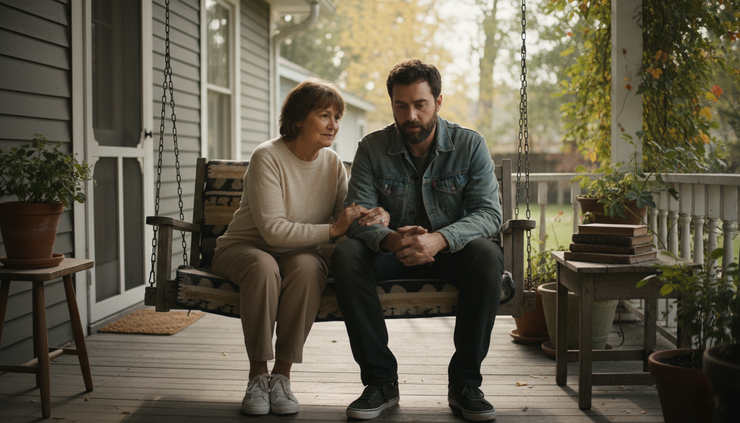
The takeaway
A patient who says stem cells changed their life is sharing something meaningful. That story may hold relief, courage, grief, risk, and hope. It should not be mocked or waved away.
But stories and proof are not the same. A testimonial can show that improvement happened after treatment. It cannot prove that the treatment caused the improvement, that it works for most people, or that the benefits outweigh the risks.
Placebo effects can produce real relief. Diseases can improve or fluctuate on their own. Other treatments can play a role. Positive stories are more likely to be shared than negative or neutral ones. Objective outcomes and clinical studies help separate signal from noise.
The most respectful stance is not blind belief or automatic doubt. It is careful listening joined with careful evidence.
When patient experience and good science work together, people get something better than a persuasive story. They get a clearer basis for decisions that may affect their health, finances, and future.



Comments