
How Skin Cells Became Stem Cells The Science Behind iPSCs and Yamanakas Breakthrough

What if a skin cell could forget what it had become?
For most of modern biology, that sounded almost impossible. A skin cell was a specialist. It had a job, a location, and a narrow identity. It helped form the body’s outer barrier, and that was that. Stem cells, by contrast, were the body’s blank pages. They could become many kinds of cells, from neurons to heart muscle.
Then scientists found a way to turn back the cellular clock.
The result was one of the most important discoveries in modern biology: induced pluripotent stem cells, often called iPSCs. These cells are made in the lab by reprogramming mature adult cells, such as skin cells, into a stem-cell-like state.
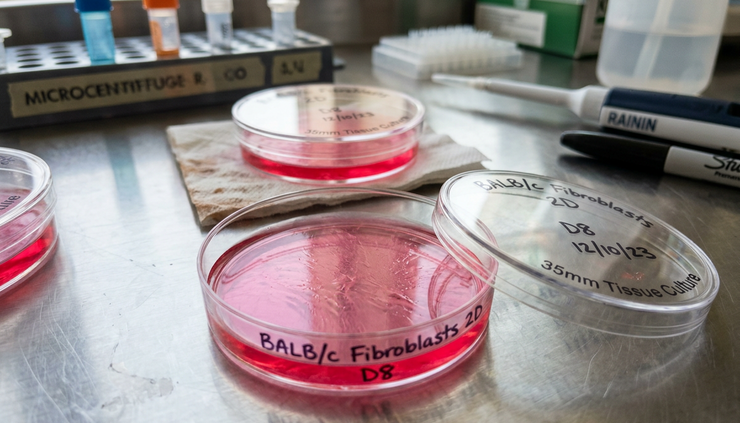
The discovery changed what scientists thought cells could do
The breakthrough is closely tied to Japanese scientist Shinya Yamanaka, whose work showed that adult cells could be pushed back into a pluripotent state. “Pluripotent” means the cell can develop into many different cell types in the body, though not an entire organism.
Before this work, researchers often focused on embryonic stem cells to study early development and cell specialization. Yamanaka’s discovery opened a different path. If adult cells could be reprogrammed, scientists could create patient-specific stem cells without starting from embryos.
The idea was bold and surprisingly simple in concept. A mature cell carries the same DNA as most other cells in the body. A skin cell and a neuron have largely the same genetic instruction book. What differs is which pages are open and being read.
Yamanaka’s work suggested that scientists could change the reading pattern.
How reprogramming resets a cell
A mature cell is not just a tiny bag of DNA. It is an organized system with chemical tags, active genes, silent genes, and a strong sense of identity.
Think of DNA as a giant cookbook. A skin cell uses the recipes for making skin-related proteins. A heart cell uses a different set. A stem cell keeps many recipe sections available because it has not fully committed to one role.
To create iPSCs, scientists introduce a small set of reprogramming factors into adult cells. These factors act like master switches. They do not rewrite the DNA sequence itself. Instead, they help reset which genes are active.
The cell gradually loses some features of its mature identity. At the same time, it begins to behave more like a stem cell. In the lab, researchers then test whether the new cells can grow, self-renew, and develop into different cell types.
This process is not instant. It is more like convincing a trained musician to return to the first days of music school, then learn a new instrument.
Why iPSCs matter for research
The power of the discovery is not only that skin cells can become stem-like cells. It is what scientists can do next.
With iPSCs, researchers can create disease models using cells from people with specific conditions. For example, a skin cell from a person with a neurological disorder can be reprogrammed into an iPSC, then guided into becoming a neuron in a dish. That gives scientists a living model of disease-related biology.
This matters because many diseases are hard to study directly inside the human body. Brain cells, heart cells, and pancreatic cells are not easy to sample safely. iPSC technology gives researchers a way to study human-like cells in the lab.
iPSCs also support personalized research. Scientists can compare how cells from different people respond to the same drug. This can help identify why a treatment works well for some patients but poorly for others.
Drug testing is another major use. Before a potential medicine reaches clinical trials, researchers can test it on lab-grown human cell types made from iPSCs. That does not replace animal studies or clinical trials, but it can reveal useful clues earlier in the research process.

The challenges are still serious
The story of iPSCs is exciting, but it is not simple medical magic.
One challenge is genetic stability. Cells grown and reprogrammed in the lab can sometimes acquire changes in their DNA or behavior. Researchers must watch carefully for unwanted mutations or abnormal growth patterns.
Another challenge is differentiation control. Making an iPSC is only part of the task. Scientists also need to guide it into the exact cell type they want. A batch intended to become heart cells, for example, must be checked to make sure it does not contain unwanted cell types.
The biggest safety concern is tumor formation. Stem-like cells can grow and divide. If immature or incorrectly programmed cells were placed into a patient, they could behave unpredictably. That is why iPSC-based therapies require careful testing before clinical use.
Many iPSC applications remain research tools, not approved medical treatments. Some clinical studies are exploring possible uses, but people should be cautious about clinics that advertise unproven stem cell cures. This article is for general information only and is not medical advice.
FAQ
Can scientists really turn skin cells into stem cells?
Yes. In the lab, scientists can reprogram adult cells, including skin cells, into induced pluripotent stem cells. These iPSCs behave in many ways like stem cells and can be guided toward different cell types.
Are iPSCs the same as embryonic stem cells?
They are similar in important ways, especially their ability to become many cell types. They are not identical, because iPSCs are made from adult cells through reprogramming.
Are iPSC treatments available now?
Most iPSC work is still in research or clinical testing. Some studies are exploring future therapies, but approved uses remain limited. Be careful with clinics promising broad stem cell cures.
Why was Shinya Yamanaka’s work so important?
His work showed that mature cells could be reset to a stem-cell-like state using specific factors. That changed how scientists think about cell identity, development, and disease modeling.
The Chronicle Takeaway
Cellular reprogramming changed a basic assumption in biology. A mature cell is not always locked forever into one identity. Under the right lab conditions, scientists can rewind some of its history and give it new potential.
That does not mean every skin cell is ready to become a treatment. The science still faces real safety and control challenges. Yet iPSCs have already changed research by letting scientists study human disease in living cells, test drugs in more personal ways, and ask questions that were once out of reach.
The discovery did more than create a new lab tool. It showed that cell identity is more flexible than anyone once imagined.


Comments